
Swift County Police Blotter Sources
No official Swift County 72-hour, weekly, or rolling arrest blotter exists. The Sheriff's Office posts a LETG "In Custody" roster instead. That table tracks who is currently held, not arrests tied to a date range. Older intake dates stay visible while custody continues. Once an entry drops off, the county offers no roll-off page or archive.
So a solid multi-day record has four layers. The roster shows live Swift County Jail custody. The arresting agency keeps incident and arrest data. Minnesota Court Records Online can show the filed case and its disposition. Local newspapers cover selected events on their own schedule. No single layer replaces the others.
No official dated log: The current roster is not a seven-day arrest report, and Swift County has never stated a weekend publishing schedule for it.
Read Swift County Arrest Records
Start from your question. Don't force sources into a blotter mold. Note the date and time of each check you make, since intake, publication, court filing, and release can all land on different days.
- Start at the Swift County Sheriff page and follow its official custody link.
- Read the roster timestamp, then compare the name, MNI, booking number, intake date, and status fields.
- Identify the arresting agency. Benson and Appleton have municipal police, while the Sheriff provides contracted policing for Kerkhoven.
- Check MCRO for a filed case, preferably by case number. A fresh matter may not yet appear.
- Use dated news reports only for incident context, not as proof of present custody.
- For an older or missing entry, submit a Chapter 13 request to the agency that created the record.
Need same-day answers? The Arrests Last 24 Hours page covers why Swift County has no separate daily feed. The blotter task is wider, tracking sources across many days and beyond the live roster.
Swift County Arrest Entry Fields
The roster offers a rich booking snapshot. Still, it falls short of a full arrest report. Read each visible field with its stated limits in mind.
| Field | Meaning and limit |
|---|---|
| Roster timestamp | Reference time for the displayed page, not a guaranteed refresh interval. |
| Photo | Booking image for an eligible displayed entry, not a permanent gallery. |
| MNI and name | Jail identifier and displayed identity; use more than a name to match. |
| Booking number | Identifies the jail booking, not the court case. |
| Intake date | Jail intake, which may differ from arrest time and place. |
| Charges and court reference | Charges recorded at booking, subject to later change or dismissal. |
| Bail and bond | Custody-related fields, not proof of payment, release, or guilt. |
The official current-custody source comes from the county itself. Always check it live. Names and custody status can change at any time.
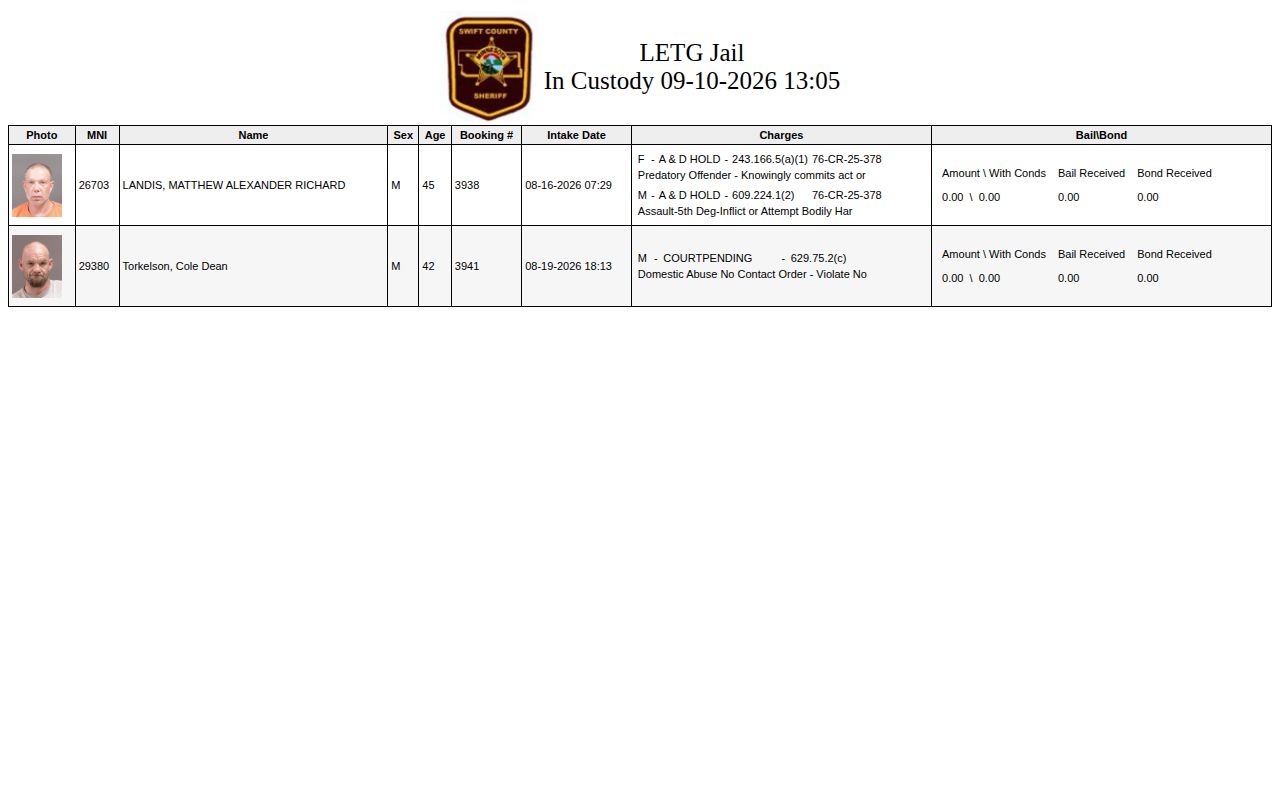
The page supports a custody check. It does not promise a complete list of arrests for the prior week.
Court disposition: Booking charges can be reduced, amended, or dismissed. The court record shows how the case actually ends.
Weekend Arrests and Publication Gaps
Swift County publishes no weekend or holiday cadence. There is no sourced basis for a Monday catch-up. None exists for a weekend surge or a fixed delay in hours. Jail intake involves transport, photographing, fingerprinting, classification, and data entry. The county has not promised when the public roster reflects each step.
Weekly newspapers add their own lag. An issue closes on a fixed schedule. A story may run days after the arrest. Big incidents draw more ink than routine ones. Silence in the press proves nothing about whether an arrest happened. A news story proves nothing about whether a person is still jailed. The Swift County recent-arrests hub collects the official custody, photo, records, and court paths.
Swift County Arrest Archives
How long does a booking stay online in Swift County? Nobody promises a schedule. The live jail roster has displayed intake dates stretching past a single day. Yet the county never says when an entry comes down. A name can vanish for many reasons. Release is one. Transfer, a correction, or a quiet site change are others.
Need an older booking? Start with the county data-request process. List the full name and a date range. Add the booking or incident number if you have it, plus the department and the items you want. Spell out whether you seek an arrest report, booking sheet, photograph, custody transfer, or release data. Looking at public data costs nothing. Copies may carry fees set by law, though the county publishes no special booking-photo rate.
Retention rules matter here. Minnesota counties follow adopted schedules, and jail, incident, medical, financial, and visitor records can each carry different retention periods. Suppose the Sheriff says an older record was destroyed or transferred. Ask which schedule series governed it and the disposition date. State Archives material helps trace historic jail registers. An archive is not a current custody tool, though.
A historical jail register can actually beat today's web table for depth. Minnesota State Archives guidance describes these registers as chronological commitment logs. They hold discharge details, names, biographical notes, officers, alleged offenses, and sentences where recorded. That does not mean every Swift County register has each field. When you write a request, be precise. Name Swift County, the Sheriff's Office, the record series, and the date span. Say whether the subject is a jail register, inmate history, incident report, or booking photograph.
Transferred or destroyed? Get the details. For a transfer, ask for the receiving repository and the transfer date. For destruction, ask which adopted schedule authorized disposal. The Minnesota Historical Society's Records Disposition Panel explains that state process. Courts are a separate search. A jail archive documents custody only. For a plea, dismissal, acquittal, conviction, or sentence, turn to MCRO or the Swift County District Court.
Note: A web entry can vanish while an agency record remains, and an unofficial copy can persist after the official custody status changes.
Swift County Blotter News
Three family-owned weeklies cover different corners of Swift County. The Swift County Monitor-News serves Benson and the surrounding area. Appleton Press covers its namesake city, and the Kerkhoven Banner serves the east. The Banner stays print-first, while the other two keep web or e-edition access. Local arrest coverage therefore runs weekly, selective, or print-only. None of them publishes a full county log. The Monitor-News site shows that local news layer at work.
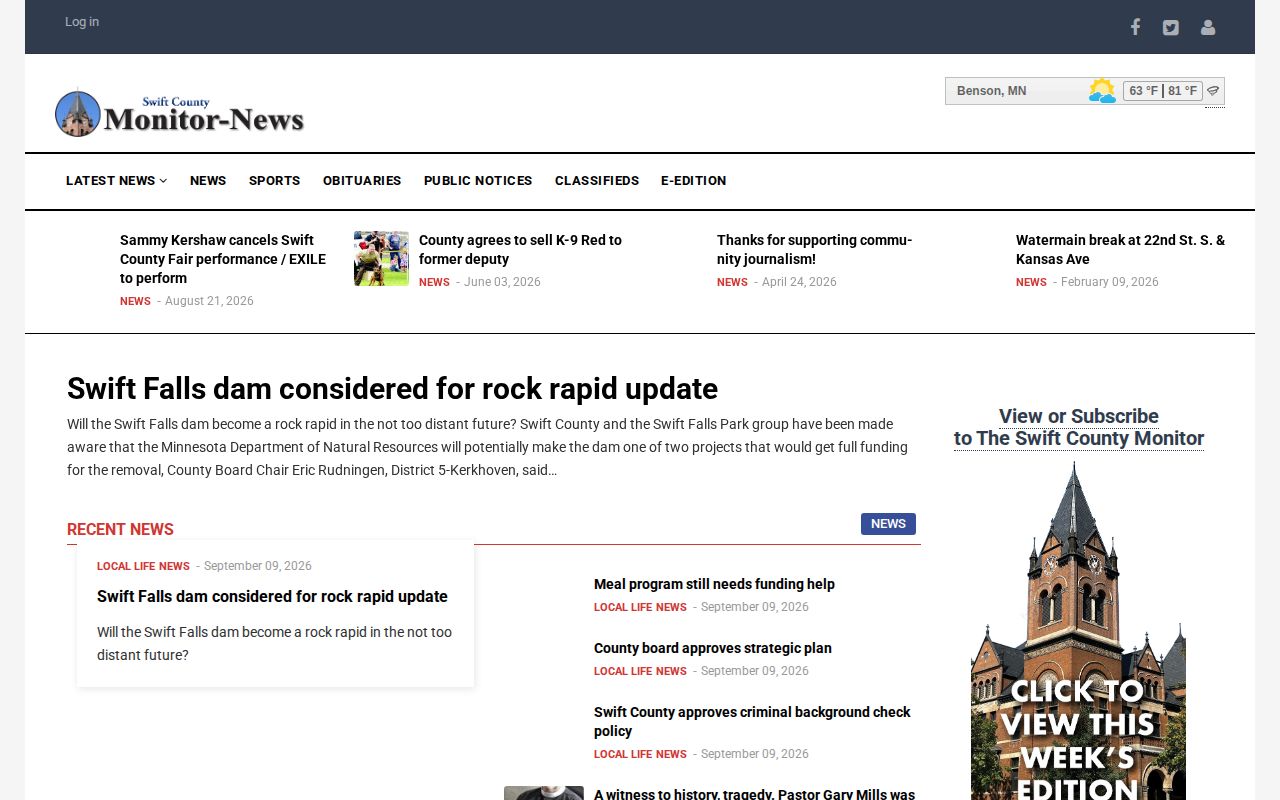
The Monitor-News handles Benson stories well, but it does not run the jail roster or print every booking. The Appleton Press site offers another look at Swift County's weekly paper market.
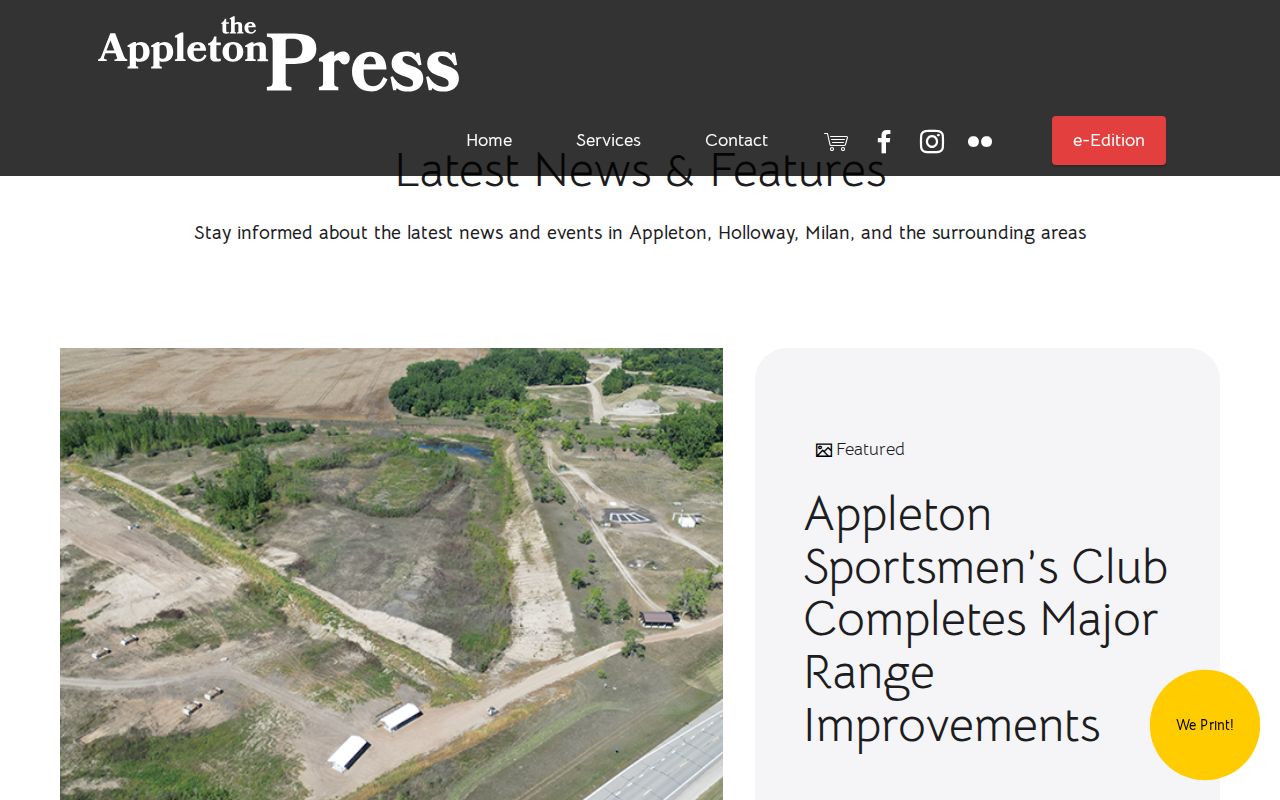
Its weekly reporting adds Appleton-area context. Print timing never proves when an arrest happened, though. It also cannot show who is in custody now. The West Central Tribune keeps a sheriff topic and periodic records columns too. Those are editorial reports built on selected public records. They may skip photos, lag an incident, or cover only headline-worthy events. No third-party booking directory runs a live Swift County mirror. None could replace the official roster. Check any unofficial result against the Sheriff, the court, or the record custodian.
Public Record Search
Sponsored Results